Blacklow Wood
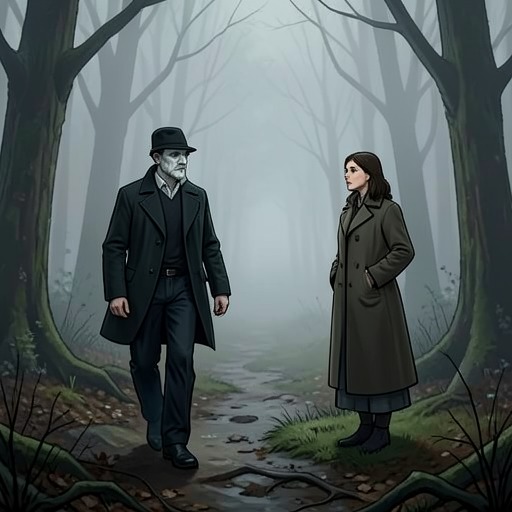
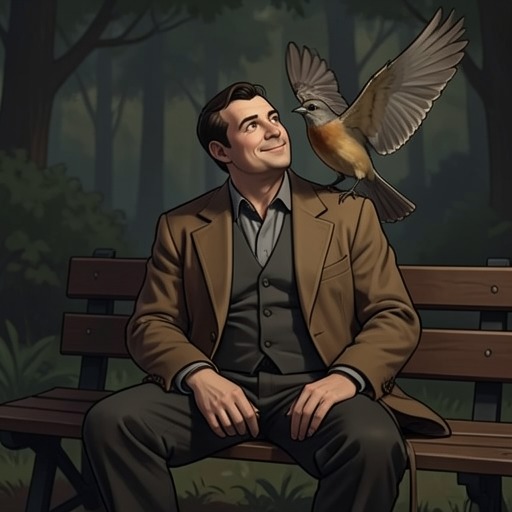
Good Morning, Midnight (Reginald Hill Edition)Blacklow Wood is both a remnant of an older landscape and a private place of emotional history. In Hat Bowler’s dream it first appears as a changed forest, a path through morning light leading to a gingerbread house; in waking memory, the wood is tied to a deeply intimate moment with a woman he loved. When he later returns to their beech tree and loses his way, the location becomes a threshold between remembered happiness, present disorientation, and the dream through which the past presses back into view.
Setting and historical landscape
The woods are identified with Blacklow Wood, one of the small patches of woodland left from the great Blacklow Forest. The larger forest once extended across the area and was hunted by the Plantagenets; what remains is scattered in little patches. This history gives the setting a double scale: the woods Hat encounters are a particular, limited place, but they belong to a landscape much larger than the present-day fragments suggest.
That contrast between former extent and surviving remnants echoes the passage’s concern with what remains of the past. The ancient forest is not restored; it persists in pieces. Likewise, the remembered intimacy associated with one of those pieces survives as a vivid point of reference, even though the relationship itself is described as a journey that proved far too short. The wood is not presented as a purely scenic background: its history and its fragments make it a place where what has disappeared can still be encountered, though never recovered whole.
The beech tree and an intimate memory
Hat’s memory locates a turning point in his relationship with the woman he loved. On a dank autumn day, they drove in his MG deep into the Yorkshire countryside. A deer leapt from a copse, forcing Hat to skid to a halt. They pushed through a hedge, sat beneath a beech tree, drank coffee, and talked more freely and intimately than they ever had before. The meeting became a milestone in a relationship whose course was ultimately too brief.
The remembered scene is built from specific acts and objects: the sudden deer, the halted car, the hedge they crossed, the coffee they shared, and the tree beneath which conversation opened up. Its intimacy is not explained abstractly; it is made legible through the shift from the forced stop to the decision to sit together and speak. In the later recollection, the beech tree carries the weight of that change. It is a physical landmark that allows Hat to return to the place where their closeness had deepened, even as the relationship’s short duration gives the memory its ache.
Return, darkness, and disorientation
The day before the dream, Hat drove back to the same spot and sat beneath the same tree. Darkness fell and mist thickened, but he remained indifferent to both. When he eventually rose and set off for his car, he realized that he had lost his way. For an indeterminate time he wandered over rough grass and boggy fields, then exhaustedly dropped beneath another tree and slept.
The return repeats the earlier visit to the woods but alters its emotional and physical conditions. The first visit had been shared, intimate, and marked by conversation; the second is solitary, and Hat’s indifference to the gathering darkness and mist accompanies a loss of direction. The same place that anchors a treasured memory cannot guide him safely back to his car. His wandering is described without a precise duration, extending the uncertainty of the night; the rough ground and boggy fields make that uncertainty material rather than merely reflective. He finally sleeps beneath a tree, but not the remembered beech, and wakes under branches after the fog has cleared and the sun has risen.
Dream and narrative significance
After waking, Hat imagines that he is still asleep and dreaming. The dream’s woods have changed: trees stand farther apart, and a broad track winds between them. Hazy sunlight and birdsong suggest morning to his ornithologist’s ear. He walks quickly at first, then slows as he discovers how terrible hope can be. The path ends not in the uncomplicated refuge of childhood but at a gingerbread house, a scene he recognizes as the land of childhood, before love, pain, and loss.
That refuge is immediately compromised by the story of Hansel and Gretel. The gingerbread house is a trap set by the Crunch Witch: those who nibble at it are caught and turned into gingerbread themselves. The dream therefore makes escape carry its own danger. Childhood lies outside the adult history of love and loss, yet the fairy tale already contains capture and harm. The later identification of the dream forest with Blacklow Wood brings the dream’s symbolic landscape into contact with Hat’s remembered and recently revisited place. Blacklow Wood gathers the passage’s shifts in time and feeling: an ancient forest reduced to patches, an intimate past fixed beneath one beech, a solitary return ending in lostness, and a dream in which hope leads toward a trap.